Tropical dressing
How to dress for Singapore heat and humidity without looking too casual
Build for airflow outdoors, movement through the day, and one removable layer indoors. Polish comes from proportion and condition, not heavier clothing.
By Pakai editorial · Updated · 8 min read
Keep these three ideas
- Create airflow through shape before adding more exposed skin.
- Use a base outfit that works outdoors and one removable indoor layer.
- Let fit, condition, and deliberate shoes provide the polish.
The short answer
Dress in a base outfit that allows air to move, does not cling at every friction point, and still has one clear silhouette. Add only one light layer that can live in your bag or over your shoulders when the air conditioning becomes the harder problem.
Looking polished does not require heavier fabric. Clean proportions, a deliberate hem, maintained shoes, and one repeated color can make an airy outfit feel finished.
Start with the climate
Treat heat, humidity, and rain as the normal brief
Meteorological Service Singapore describes high humidity, abundant rainfall, and high, fairly uniform temperatures throughout the year. Its climate normals place annual mean relative humidity around 82 percent, with many daytime maximum temperatures around 31 to 33°C.
That does not mean every day feels identical. Sun, wind, rain, the length of the outdoor walk, and the time spent in air conditioning all change the experience. Check the actual forecast and heat guidance when the plan includes prolonged outdoor activity.
- Outdoor duration
- Five minutes between car and lobby is a different clothing brief from an afternoon market, garden ceremony, or long walk between appointments.
- Indoor destination
- A cold office, cinema, or banquet room can make a light layer useful even when the journey outside is warm.
- Weather exposure
- Rain changes the usefulness of long hems, delicate shoes, suede bags, and anything that becomes transparent or heavy when wet.
The three-part system
Airflow, low friction, removable structure
Instead of searching for one perfect tropical fabric, solve three separate problems. Shape controls airflow, the way fabric meets the body controls comfort, and a removable layer controls the transition indoors.
- 1. Airflow through shape
- Look for space at the back, underarm, waist, or leg. A garment can cover more skin and still feel easier than a tight piece with no room for air to move.
- 2. Less friction where you move
- Notice the underarm, inner thigh, waistband, collar, and bag strap. Softness and room at those points matter across a long humid day.
- 3. One removable source of structure
- Use an overshirt, fine knit, scarf, or unlined jacket only when needed. The base should remain complete after that layer comes off.
Four tropical formulas
Keep the outline clear and the fabric moving
The exact fiber label is only one part of comfort. Test the finished garment for weight, opacity, movement, seams, and how it behaves after sitting.
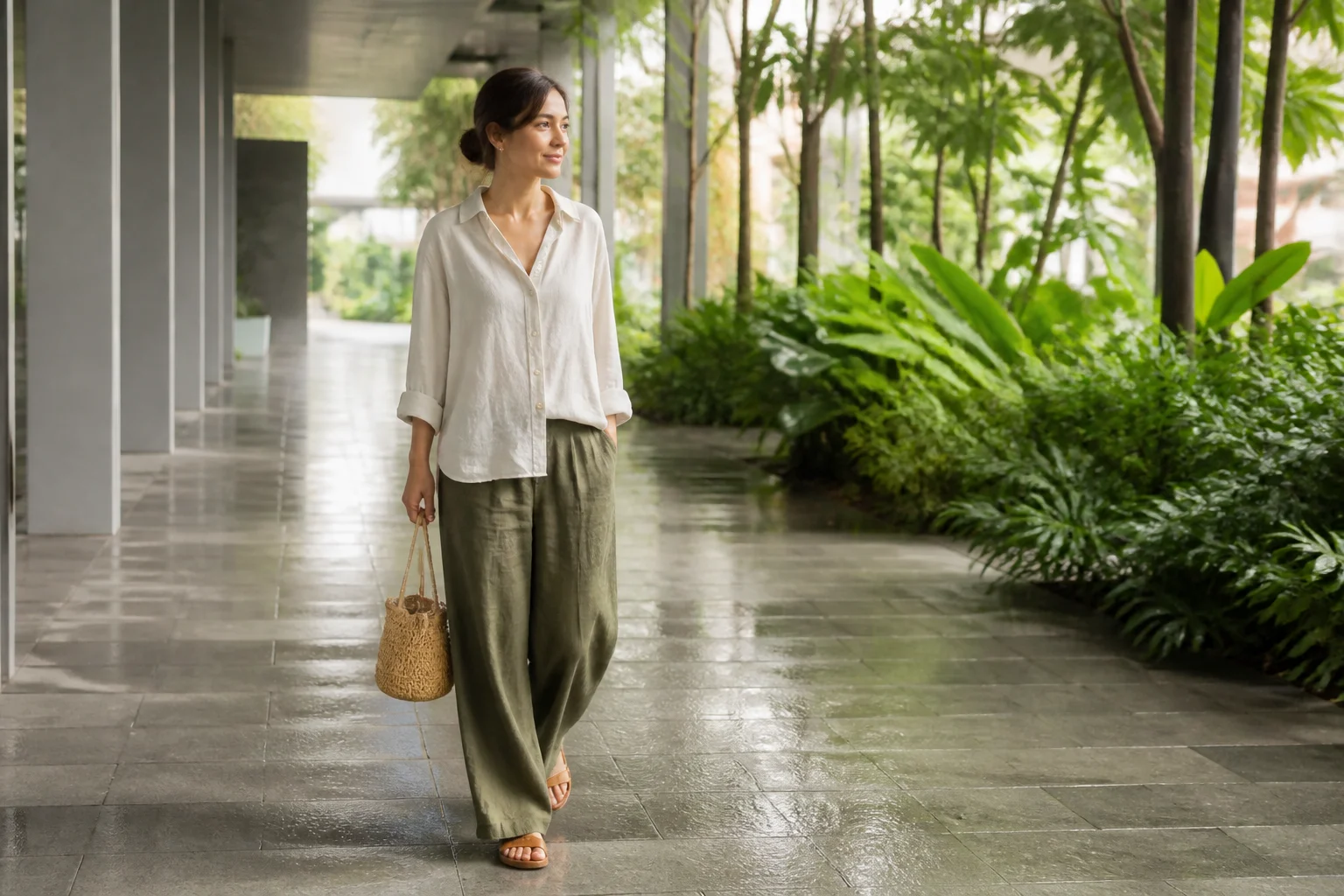
- Loose shirt + wide-leg trousers + refined sandal
- Use a partial tuck, shorter hem, or sleeve roll to create shape. The sandal keeps the line light without making the whole outfit read as beachwear.
- Column dress + open overshirt + clean flat
- The dress remains a complete outdoor base. The open layer adds visual structure and can come off as soon as the temperature rises.
- Knit polo or shell + fluid skirt + loafer
- A defined neckline gives polish while the lower half moves. Choose a shoe you can wear through both transport and the destination.
- Relaxed matching set + simple accessory + minimal shoe
- A coordinated set makes loose proportions look intentional. Break it up later with pieces already in your wardrobe.
Before you buy
Use a movement test, not only a mirror test
Sit for several minutes, stand, walk quickly, raise your arms, and carry the bag you would use. Check whether the garment twists, grips, turns transparent, or needs repeated adjustment.
Natural rumpling can be part of an outfit's character. The useful distinction is whether the fabric softens attractively or whether the collar, placket, waistband, and hem lose all definition before the day begins.
- Check the light
- View pale or loosely woven fabric in daylight and with a phone camera. Add a suitable base layer when needed rather than discovering the problem outside.
- Check the bag strap
- A heavy shoulder bag can trap heat and crush a delicate top. Test the real bag against the real fabric.
- Check the hem after sitting
- A long trouser or skirt can change length and shape once the fabric settles. Make sure it still clears wet ground and stairs.
For long outdoor plans
Style advice is not heat-safety advice
For prolonged outdoor activity, use Singapore's current Heat Stress Advisory rather than judging risk from the outfit alone. The National Environment Agency notes that heat stress reflects temperature, humidity, wind, and solar radiation together.
Change the plan, seek shade, hydrate, and follow current public guidance when conditions call for it. Clothing can support comfort, but it cannot remove environmental risk.
Browse the building blocks
Sources and review
Turn the guide into your outfit
Pak will ask about the details that matter, then build the full look.
Build my Singapore-weather outfit